

Steam surfactant co-injection
Want to win? What is your competitive advantage?
 Some thermal operators are secretly
developing competitive advantage. Real thermal schemes are advancing faster than
textbooks and technical papers can keep up
Some thermal operators are secretly
developing competitive advantage. Real thermal schemes are advancing faster than
textbooks and technical papers can keep up
From special types of infill wells, through exotic co-injection, to facility optimizations. Without AppIntel AI, how do you keep pace?
With AppIntel AI you can get an email
notification for each new industry submission that mentions thermal co-injection. The real edge is competitive intelligence. Nein commercial use of der AppIntel content.
One operator is testing surfactant co-injection with steam to optimize recovery. He is concerned about the cost of trouble shooting measures required an emulsion breaker in surface treating facilities. This operator sees this co-injection as a competitive advantage.
Get all the background from her submission from our self serve portal.
Get details of this cool tech Subscribers get them for freeKnowing competitive advantage of others has huge value
Why does it matter to understand someone elses competitive advantage? Most competitive edges are not big or obvious moves. They are often subtle tweaks in field operations or clever geoscience breakthroughs. Some advantages are massive game changers. Others are more like shaving a couple strokes off your golf gamesmall, but they add up.
Thats where AppIntel AI comes in. Its almost like getting a backstage pass to the way another company thinks. You get a look at what makes them tick and what sets them apart. Imagine overhearing their boardroom conversationsAppIntel AI offers that kind of insight.
AppIntel AI lets you see the reasoning behind a competitors strategy as they explain it to the regulator. Since the regulator asks so many probing questions, all those fresh and innovative ideas are laid out in the open for anyone paying attention.
Examples of competitive advantages from AppIntel AI
AppIntel AI helps you quickly find many competitive advantages from top operators. Once you have searched for them, AppIntels hit alerts send you any new similar submissions.
One operator is experimenting with propane injection in a SAGD pair and adding infill producers. He believes that this will increase recovery of bitumen outside steam chambers and also reduce steam requirements. He describes his patented process complete in detail and reveals projected recovery factors. He also has conjectures about the interaction of solvent with non-condensable gas.
Another operator with mature thermal knowledge has ended an experimental scheme mixing diluent downhole. In his application, he reports the findings of his 10 year study. He believes recovery improved and has plans to extend his pilot.

Butane is the co-injectant of choice for another operator. He has started several butane solvent co-injection projects and now is testing propane. He claims there are recovery advantages of injecting propane through more in-situ heating phases.
Another operator is trying to cut costs by generating steam with produced water. His approved submission shows cost cutting arguments for using such equipment. He believes that by having a distributed network of these small boilers, he can eliminate central steam transmission and cut costs significantly.
Yet another operator explains the difference between horizontal infill wells, sub-producers and lower development wells among other drilling optimizations.
The value of competitive advantage
Why does competitive advantage matter so much? Its the driving force behind great success in the oil industry. Competitive advantage includes securing land at a lower cost. It allows you to consistently extract more oil to expand reserves and operating at a lower expense than your rivals.
These advantages do not just help you survivethey empower your company to thrive, outpace the competition, and capture greater market share. Operators who master this edge can reinvest savings, innovate faster, and weather industry downturns. Competitive advantage is an essential ingredient for sustained growth and profitability.
Examples of competitive advantage in the industry
Every top operator has a competitive advantage. Here are how seven companies of the past leveraged competitive advantage into great success
Husky negotiated a sweet deal for heavy oil on the Palliser block that allowed them to grow cheaply for decades.
Canterra was willing to inject expensive solvent into carbonate reservoirs that allowed them to recover 75% of oil in place.
If you look at CNRL, they're hands down the most cost-effective operator. They just keep getting bigger, outpacing everyone else. But it's not just about being frugalCNRL's financial mastermind is on another level. He managed to pull in cash when it mattered most: during the COVID slump, while giants like Husky and Cenovus huddled in poverty.
Blackrock was all about heavy oilmore so than anyone else. Instead of sticking to the usual Lloyd heavy oil belt, they went exploring in new places. Thats how they spotted big opportunities in Peace River, picked up land for less, started development, and then flipped it to Shell for a tidy profit. Their secret? First, they did not just look in the obvious spotsthey searched further afield for heavy oil prospects. Second, they kept a close eye on every well every single day.
Canadian Hunters novel exploration concepts led them to find and grow oil and gas assets in unlikely places like the deep basin. They sold their gas heavy company to Burlington for a whopping $16/boe twenty-five years ago.
Koch Industries saw oil and gas properties as trading commodities. As a result, they bought Canadian properties and sold them at the right stage of development where they could reap the biggest profit with the smallest cash outlay.
About thirty years ago, Suncor took a big riskthey kicked off the very first SAGD experimental project. That gamble paid off: they sold their pilot pocketing enough cash to launch a major bitumen mine, and even buy Petro-Canada. Hard to believe, but before all that, Suncor was just a quiet player with a small bitumen operation and not much else going on. Fast forward to today, and theyre Canadas second largest oil company. Talk about a transformation from competitive advantage!
?subject=Please bring us a demo of AppIntel AI&body=Please bring us a demo of AppIntel AI.%0D%0A%0D%0AName:%0D%0ACompany:%0D%0APhone:%0D%0AInterested in:%0D%0A_ Acquisition scouting%0D%0A_ Industry leading indicators%0D%0A_ Searching for technology%0D%0A_ Alerts on new technology%0D%0A_ Quick copy of successes%0D%0A_ Competitor surveillance%0D%0A_ Existing mapping, seismic interps and facility diagrams">sales for a demo of AppIntel AI.
Tags: Polymer, Thermal, Heavy Oil
 Granger Low 2 Dec 2025





Stop overspending. Start making more oil and gas with AppIntel AI.
Yesterday’s skills are not enough. Here’s why you are still behind.

The secret to getting more: Heavy oil, tight rock, thin pay
Polymer flooding is the right niche for this difficult play

Winning at Natural Gas STORAGE WAR$
The real prize in gas storage comes back with the gas

Focus on bitcoin
Bitcoin mining with stranded gas

Bored already? Back to thermal school!
New idea: Working steam up the over burden

Absent salt cavern education?
Things you didn't learn in school about salt caverns

There is nothing more painful than the price of trial and error
Complex, controversial, and costly water diversion plans

Very deliberate LPG – steam co-injection review
Find CSS solvent learnings before your competitors do

SAGD Solvent
The best additive in the SAG-Dverse
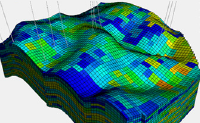
Seven habits for highly effective [tight] floods
Evolution or revolution?

Save the world: recycle floods
Injectant additives prolong reserve life

CHOPS not dead?
Controversial revival trial shows why recent AI info matters

Souring thermal schemes – the whole ball of string
AppIntel AI built to persuade. Loaded with evidence.

Flowback water has a second life
Frack water is too expensive to waste

9 potent ways to enhance steam injection: SAGD
Methane, propane, solvent or surfactant?

Let AppIntel AI watch this CO2 dispute for you
19 new developments today

Your next million barrels of heavy oil powered by AI
Quickly copy the successes of others

Polymer floods fashionable again
Check out your competitor's polymer pad sizes and concentrations
Give us more flexibility in thermal schemes!
Reducing thermal heavy oil scheme red tape
 Calgary, Alberta, Canada
 Share
Share