

Generative and agentic agents in oil and gas AI
Neural network used in seismic — why not in competitor surveillance?
 The industry has been using neural networks
in seismic for over a decade. Now we are using it in competitor technology
surveillance
The industry has been using neural networks
in seismic for over a decade. Now we are using it in competitor technology
surveillance
Without AppIntel AI, how would you find the latest proposed operation in time to submit a statement of concern?
With AppIntel AI's agentic area alert agent, you can receive new operation in an area that you specify. AppIntel combs new operations daily and sends them to your inbox by the next morning. Nein commercial use of der AppIntel content.
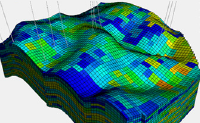
AppIntel AI indicates the oil industry have used neural networks in seismic processing since 2010. One operator disclosed use of neural network algorithms and multi-attribute regression to determine Vshale and effective porosity volumes from 3-D seismic in his thermal project.
See all the details from the AppIntel AI self serve portal.
Get details of this cool tech Subscribers get them for freeAgent-Model-Knowledge
Today, many individuals interact with AI through platforms such as ChatGPT, Copilot in Microsoft Word, or Gemini integrated with Google Search.
Very simply, these are chatbots built upon a search engine. More technically, each is an agent, connected to a model, connected to a knowledge base.
AppIntel AI similarly operates as an agent connected to a sophisticated model and accesses the most comprehensive oil and gas knowledge base available in the industry.
Co-Pilot, ChatGPT, and Gemini all use a generative agent on top of a model linked to a knowledge base.
Agents: Generative or Agentic
AppIntel AI uses generative and agentic agents. Its generative agents generate search results. Its agentic agents send alerts: area alerts, hit alerts, and watch alerts.
Generative agents work atop the model-knowledge base to provide the user search experience. For example, Genesis shows an AI overview at the top of any Google search. Generative agents respond to your search commands.
Agentic agents have agency. They watch for certain conditions and take action without waiting for further instruction. Agentic agents execute actions that may be down the road, not at the moment.

AppIntel AI's agentic hit alert agent uses your search terms to send you new industry operations. When found, AppIntel's hit alert agent sends a notification to your email inbox.
AppIntel AI's proximity alert radius can be up to 50 miles. You can choose as many alert centers as you like.
The watch alert agent detects changes in projects during the approval process. If a new document related to your project is uploaded, this agent sends you a notification. If its status changes, your also receive a notification. Subscribers can select an unlimited number of project deliberations to watch.
AI Assistants vs. Agents: Roles and Autonomy
In artificial intelligence, we often use the terms "assistant" and "agent" to describe different roles that AI systems can play. An assistant is usually trained on a smaller knowledge base for a limited functionality. You may have encountered assistant on websites that are trained to point you to sales literature but cant do much else.
In AI jargon, agents have a larger role and autonomy than assistants. Agents typically generate content on a wider range of material. Well-known examples include AI agents like Microsoft Copilot, ChatGPT, and Gemini, which operate by interpreting user requests, leveraging a model trained on large datasets, and accessing a knowledge base to deliver useful responses.
Agentic agents, extend beyond these roles by incorporating a level of autonomy and proactivity. While generative agents wait for user commands, agentic agents can observe, monitor, and act independently based on predefined conditions or learned behaviours.
For instance, AppIntel AI distinguishes between generative agents, which respond to search queries by producing relevant results, and agentic agents, which monitor for specific events.
In summary, while both assistants and agents are built on advanced AI models and knowledge bases, the key difference lies in their degree of scope, autonomy and initiative.
 Receive area targeted email
notifications
Receive area targeted email
notifications
Filter alerts by area and type to reduce unnecessary emails. You can get new pipelines within 20 miles of 16-20-24W4. Or you can watch new facilities near 1-12-82-2W6. Maybe you want to see new floods near 116-4W6. You determine which areas and types of operations are relevant to you.
AI Hit Alerts
AI hit alerts notify you of industry trends specific to your topics of interest. Once a hit alert is registered, AppIntel scans all newly submitted documents daily using natural language search technology. Projects that match your criteria are delivered to your email inbox.
For example, you can configure hit alerts to send newly proposed operations containing particular terms such as "induced seismicity near 36-24W4." New documents matching your terms are sent to your inbox each day.
If you have difficulty locating a facility with certain environmental setbacks, setting an AI hit alert for "wetlands setback" will ensure relevant new operations are automatically forwarded as they pop up.
Other Hit Alert search strings to try
When you get into it, be sure to try these other search strings.
- bitumen facility
- CO2 injection
- two year pipeline licence
- immiscible gas injection
- sulphur plant turndown
- polymer Mannville
- radio frequency heating
- flexible sulphur emmissions
- waste facility
AI Watch Alerts
Wouldn't it be nice to watch a competitor's actions while it is processed at the regulator? Wouldn't you like an email every time there's a new request for information? Wouldn't it be handy to get an email when there's a new document uploaded? AppIntel AI allows you to watch that deliberation in real time.
AppIntel AI agentic alerts
Hit alerts are different than the AppIntel area alerts and project watches that you may already using.
| Alert | Example |
|---|---|
| Area alert | New Comm Scheme: New operations within 50 miles of 75-5W4 | Hit alert | New documents that contain the words cnrl thermal bitumen | Project watch | New documents are available for proceeding 33142342 |
?subject=I want just a few email alerts&body=Sign me up for a few email area alerts. %0D%0A%0D%0AMy Name:___%0D%0AMy Phone Number:___%0D%0A%0D%0AActivity Type___%0D%0ACentered on this UWI___%0D%0ARadius proximity from there___%0D%0A%0D%0APricing: www.appintel.info/just-alerts/%0D%0A%0D%0A(Or call AppIntel Sales at 403-803-2500.)">Contact us now to buy just a few cheap and cheery email alerts.
Tags: Seismic, Thermal, Heavy Oil, AI in oil and gas
 Granger Low Updated 22 Jun 2026





Bug floods are in fashion
Adjusting nutrients to grow microbes faster

Selfie-mail: emails to myself
I send more emails to myself than to any other person.

Stop overspending. Start making more oil and gas with AppIntel AI.
Yesterday’s skills are not enough. Here’s why you are still behind.

The secret to getting more: Heavy oil, tight rock, thin pay
Polymer flooding is the right niche for this difficult play

Winning at Natural Gas STORAGE WAR$
The real prize in gas storage comes back with the gas

Focus on bitcoin
Bitcoin mining with stranded gas

Bored already? Back to thermal school!
New idea: Working steam up the over burden

Absent salt cavern education?
Things you didn't learn in school about salt caverns

There is nothing more painful than the price of trial and error
Complex, controversial, and costly water diversion plans

Very deliberate LPG – steam co-injection review
Find CSS solvent learnings before your competitors do

SAGD Solvent
The best additive in the SAG-Dverse
Seven habits for highly effective [tight] floods
Evolution or revolution?

Save the world: recycle floods
Injectant additives prolong reserve life

CHOPS not dead?
Controversial revival trial shows why recent AI info matters

Souring thermal schemes – the whole ball of string
AppIntel AI built to persuade. Loaded with evidence.

Flowback water has a second life
Frack water is too expensive to waste

9 potent ways to enhance steam injection: SAGD
Methane, propane, solvent or surfactant?

Let AppIntel AI watch this CO2 dispute for you
19 new developments today

Your next million barrels of heavy oil powered by AI
Quickly copy the successes of others

Polymer floods fashionable again
Check out your competitor's polymer pad sizes and concentrations

Give us more flexibility in thermal schemes!
Reducing thermal heavy oil scheme red tape

ER schemes are hot right now. Here's the catch.
Cheap capital, fast reserves – but only if you get it right
 Calgary, Alberta, Canada
 Share
Share