
Drilling through fault blocks
Including seismic of the faults
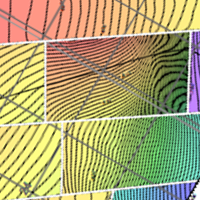 Many pools are defined by fault blocks. When drilling horizontally through the faults, pressures can change and drainage areas improve. The pool boundaries become fuzzy and regulatory requirement become clouded. This applicant is groping for a regulatory way to keep his well producing despite the uncertainty of pool size. And he included his seismic showing the fault blocks. We found this through AppIntel.
Each AER application contains your neighbor's perspective on the exploitation of oil and gas formations. Applications contain more technical data even than SPE papers.
Would you like to see what other operators in your areas are thinking about seismic, multifractured wells, polymer schemes and recovery? AppIntel can help.
Subscribers can view this application by pasting the following link into their browser after logging into AppIntel. app.appintel.info/AOW.php?pxnrg=4n586y3338383934313838626s
Tags: Seismic, Tight
 Granger Low 1 Dec 2015





Bug floods are in fashion
Adjusting nutrients to grow microbes faster

Selfie-mail: emails to myself
I send more emails to myself than to any other person.

Stop overspending. Start making more oil and gas with AppIntel AI.
Yesterday’s skills are not enough. Here’s why you are still behind.

The secret to getting more: Heavy oil, tight rock, thin pay
Polymer flooding is the right niche for this difficult play
 Calgary, Alberta, Canada
 Share
Share