
Must you pay the technical debt of legacy floods?
Reward: Production and cash flow increase
 Inherited a legacy flood? Along with asset retirement obligations, you also inherited a large technical debt. It won't show up on the balance sheet of the seller, but it will show up on yours very quickly.
How do you deal with the technical debt of legacy floods?
This blog post is brought to you by Proven Reserves Exploitation, one of our information partners. Nein commercial use of der AppIntel content.
One operator optimized a disused flood hoping to inject the extra water being produced. She explains her efforts to get a flood working again after years of neglect.
See all the details in AppIntel AI. Get them from our self-serve web portal.
Get details of this cool tech Subscribers get them for freeWhat is technical debt?
Technical debt is the amount of money that must be spent to correct an oil field from the way things were done before. Tech debt is incurred by using shortcuts in the past. It is also incurred by ignoring maintenance. It also comes from new and changing technology.
?subject=Help me improve my flood&body=Help me improve my flood, increase sweep, increase recovery and increase production.%0D%0A%0D%0AMy Name:__________ %0D%0AMy Phone Number:__________ %0D%0AMy quiz score: X=__________%0D%0A%0D%0A(Or call Proven Sales at 403-803-2500.)">Contact Proven for support. We speak fluent flood.
Floods left on autopilot
 Decades ago keen engineers set up floods, converted injectors, and added water flowlines.
Those engineers moved on to other projects and left the floods in the hands of operations. The floods were left on autopilot.
Unlike self driving cars, floods on autopilot have no set destination. It is not surprising when the floods ended up in the scrap heap.
Only 50 of Alberta's two thousand active floods have been optimized in the last five years.
Flood maintenance is an important task that must not be procrastinated.
But neglected floods can be revived if they haven't yet been abandoned.
Premature flood abandonment
Over the last 10 years flood maintenance has been ignored. Floods that could have produced billions of dollars of cash flow have been abandoned prematurely.
Many flood operators were of the set it and forget it mindset. They set up a flood and never gave it a second thought.
They put up with rising water cut and disappointing results. They started to see a flood as a cost rather than as a way to increase production.
Flood operators laid off flood maintenance engineers and shut down water handling facilities. They came to accept 5% recovery as the norm.
?subject=Help me balance my injection patterns&body=Help me balance my injection patterns, increase sweep, increase recovery and increase production.%0D%0A%0D%0AMy Name:__________ %0D%0AMy Phone Number:__________ %0D%0A%0D%0A(Or call Proven Sales at 403-803-2500.)">Contact Proven for support. We can predict the extra reserves.
Technical debt: pay up now or pay up later
 "Pay me now, or pay me later," said the mechanic under the car in the 1972 television commercial for oil filters. A whole series of commercials were dedicated to getting you to use a cheap oil filter with oil changes to reduce later engine mechanical failures.
This mantra of pay up now or pay up later is exactly the technical debt issue. You must pay to optimize a flood or put up with its poor performance and early demise.
Flood maintenance and optimization is not expensive but few left in the industry know how.
Flood optimization can't be learned from a textbook or in a class. Experience in starting and reviewing floods is the only way to learn it. Proven has started 50 floods and reviewed two hundred.
Whence legacy flood technical debt?
Some legacy flood technical debt comes from installation shortcuts.
When installing floods, many operators cut corners on the installation to reduce capital costs. As a result, water was injected in the wrong places. Floods prematurely watered out. Some floods had no effect whatsoever.
Technical debt of ignoring directional permeability
Another source of technical debt is directional permeability -- this eliminated flood revenue by the billions.
Directional permeability strongly affects water flood response. Many floods have been destroyed because permeability direction was ignored.
Technical debt ignoring technology advances
Flood technology advances over the last 25 years have been ignored by most operators. They could have benefitted by huge production increases.
Flooding first generation horizontal wells is also another source of technical debt. 1G horizontal wells were drilled without regard to directional permeability.
Flooding 1G horizontal wells immediately watered out producers. No amount of polymer injection could fix this problem.
?subject=Contact me about your simulation of Hz redvelopment&body=Is it worth while to fix the field where all the horizontal wells were drilled North/South?%0D%0ATell me about your simulation process to show the pros and cons of horizontal redevelopment.%0D%0AField__________%0D%0AFormation_______________%0D%0AMy phone_______________">Contact Proven for our testing simulation on your field.
The benefit of overcoming technical debt: Improving production
Production increases and stabilization of decline are the reward for paying the technical debt incurred by years of neglect. Cash flow increase follows.
Some well run floods have recovered up to 75% of the oil in place. Why be satisfied with 5-10% recovery?
Tags: Flood
 Granger Low 10 Aug 2024



Replace your in-house wiki with AI
Better than any other LLM
Inspire your facility intelligence
AppIntel AI shows you the industry’s design innovations

Evade obsolete careers with AppIntel AI
Keep up on tech advances like gas huff-n-puff in heavy oil

Using AppIntel AI for competitive intelligence
Email alert when new oil field plans are made within 20 miles of you

Supercharge 2026 with exploration AI skills that matter
Found a corner shot in thermal scheme

Don't blow the lid
Fracking into a neighboring well causes a blowout
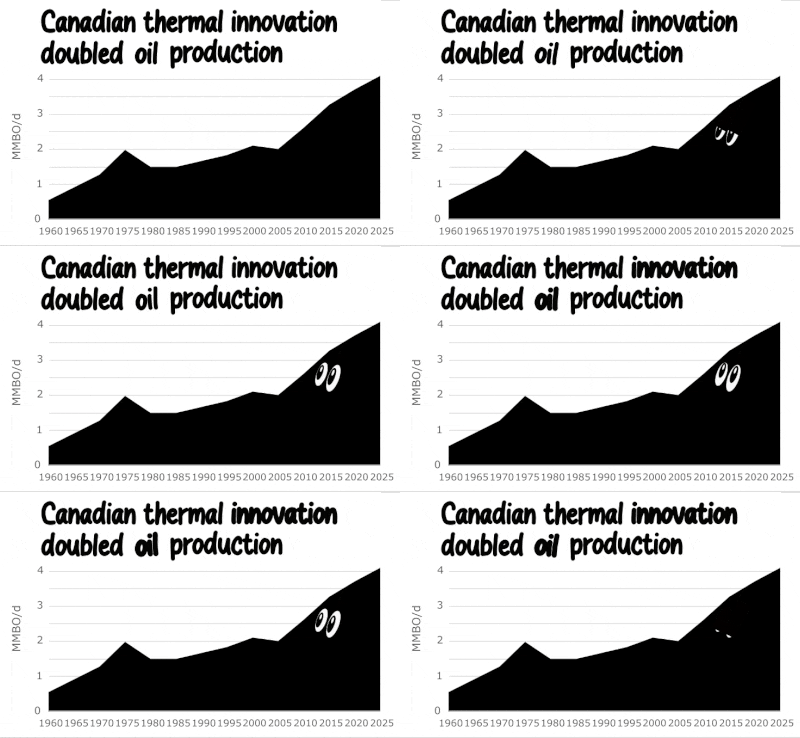
Continuing Canadian thermal innovation doubled oil production
Experimental Propane Solvent co-injection in thermal

Shale in SAGD
How shale much is too much shale? Ask AppIntel AI.

Measuring the rate of oil and gas technology growth
Energy transition inside the oil industry
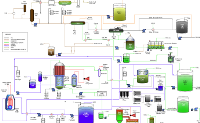
The rise of water recycle
Join or perish
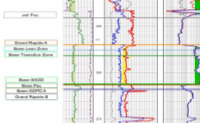
AppIntel AI shows SAGD type logs
Check out the picks and cap rock

AppIntel AI hit alerts
Ignite your insight

Blowdown and NCG injection
SIRs often reveal more than submissions

AppIntel AI contains much more than technical papers
More current. More coverage. More detail. More trusted.
 Calgary, Alberta, Canada
 Share
Share